
“Knowledge is only a rumour until it lives in the bones”
~ a traditional saying from the Asaro tribe of Indonesia and Papua New Guinea (popularised by Brené Brown)
Hi all!
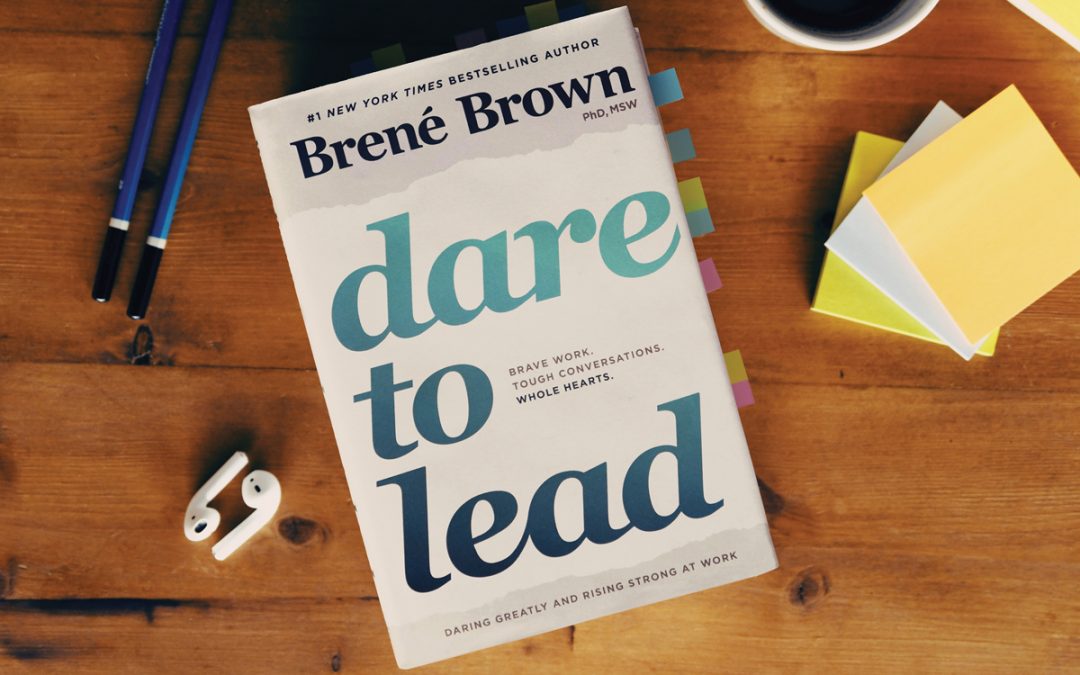
When Brené Brown sold Dare to Lead to BetterUp, we spent a lot of time in uncertainty, not knowing how that decision would impact us at THC. Partnering with a technology-led organisation for Brené made sense if the work was going to reach more people and be delivered at scale. But knowing a decision makes sense doesn’t mean there isn’t a human experience of working through it.
There were things we were gaining and things we were letting go of. I’ve always loved the human experience of delivering Dare to Lead and, recently, we’ve found ourselves able to run an in-person open workshop again.
Why does this work continue to feel so relevant?
1) Because knowing what to do isn’t the same as being able to do it
I had a conversation recently with a leader who was feeling massively overwhelmed. There was too much work and not enough capacity. On the surface, the answer seemed fairly obvious: prioritise more ruthlessly and accept that some things weren’t going to get done.
But as we stayed with the conversation, something else emerged. Not finishing things felt dangerous because underneath it sat a fear of losing their job. Intellectually, they knew that even if that happened, they would be OK. They had options. Their head knew they were safe, but their body didn’t.
In Dare to Lead, vulnerability is defined as the experience of uncertainty, risk and emotional exposure. Fear itself isn’t necessarily what prevents courageous leadership; it’s how we protect ourselves when we feel fear. We armour up and, in this person's case, the armour was continuing to say yes to everything.
We can intellectually understand vulnerability and still hate the feeling of it. We can know we need to prioritise and still keep saying yes. We have extraordinary access to information and can generate frameworks, strategies and answers faster than ever. But knowing what good leadership looks like has never guaranteed we can practise it when we feel threatened.
2) Because our relationship with knowing is changing
One form of armour Brené describes is being the “knower”: needing to have the answer and be right, rather than being a learner and trying to get it right. What I find particularly interesting is the idea that we can come to believe knowing is the value we bring to our work.
I’ve been having conversations with people in professions such as law and veterinary medicine, where knowledge is deeply intertwined with professional identity. People have spent years studying and training to become the person who knows. AI changes our relationship with information and, potentially, where some of the value of knowledge and expertise sits.
If I’ve spent twenty years becoming the person with the answer, what happens when an answer can be generated in seconds?
That feels like an identity-level challenge, not simply a skills one. I wonder how much armour we’ll see as a result: clinging to being the expert, dismissing new technology, overstating certainty or hustling to prove our value because something we’ve built our identity around suddenly feels less secure.
Daring leadership offers another possibility: moving from needing to be the knower towards having the grounded confidence to be a learner. Expertise doesn’t disappear. But perhaps it increasingly includes curiosity, judgement and the courage to say, “I don’t know yet.”
3) Because when we don’t have a map, we need to know what guides us
It is relatively easy to have values and much harder to put them into practice. This moment of deep uncertainty seems a fertile place to stress-test what an organisation says it values.
One organisation I know talks about humanity, integrity and excellence as core values. They’re also deeply uncomfortable with aspects of AI. That tension interests me because values become much more useful when they are tested. What does humanity ask of us when technology could remove jobs? What does integrity look like when we don’t know how our decisions will play out?
Values don’t remove uncertainty or provide a five-year map. But they can help us decide how we want to behave while we find our way through it. Living into our values is one of the Dare to Lead skill sets for exactly this reason: values have to become something we practise, not simply something we say.
I don’t think we need another leadership framework promising certainty about an uncertain future. I think we need to build our capacity to lead within the uncertainty that is already here, with integrity rather than heroism, without pretending we know things we simply cannot know yet.
To be able to say:
“I don’t know exactly where we’re going. I’m willing to learn. I know what matters to us. And I’m prepared to keep showing up while we work it out.”
If you’d like to explore this work with others, we’re excited to be running an in-person open Dare to Lead workshop again. Email Liz for more info.
Rox x